RAG Freshness 生产实战:时间语义、增量索引、版本治理与过期答案拦截
从 Event Time、Valid Time、CDC、Outbox、External Version、Tombstone、Watermark、缓存失效、时间感知检索到 Freshness SLO,构建能够解释“数据何时发生、何时可见、答案依据哪个版本”的生产级 RAG 新鲜度系统。
RAG 接入外部知识,只解决了“模型可以查资料”,没有自动解决“模型查到的是不是当前有效资料”。
生产系统中的过期答案通常不是单点故障,而是一条时间链路上的累计延迟:
业务事实已经变化
→ 来源系统尚未提交
→ CDC 尚未捕获
→ 队列积压
→ Worker 重试
→ Elasticsearch 已写入但尚未对搜索可见
→ 检索仍命中旧 Revision
→ Context 同时包含新旧版本
→ Answer Cache 继续返回旧答案
因此 Freshness 不是给 updated_at 加一个排序权重,而是一个从来源事实、传播、索引、缓存、检索、上下文到答案声明的完整协议。
资料快照:本文核查截至 2026-08-06。时间语义与流式处理主要依据 Apache Flink Event Time / Watermark 文档;增量变更依据 Debezium MySQL Connector;索引顺序与可见性依据 Elasticsearch External Versioning、Refresh 与 Point-in-Time 文档;动态事实评测参考 FreshQA / FreshLLMs。文中的 SLO、阈值和时间窗口是工程示例,必须按真实来源、流量和业务风险校准。
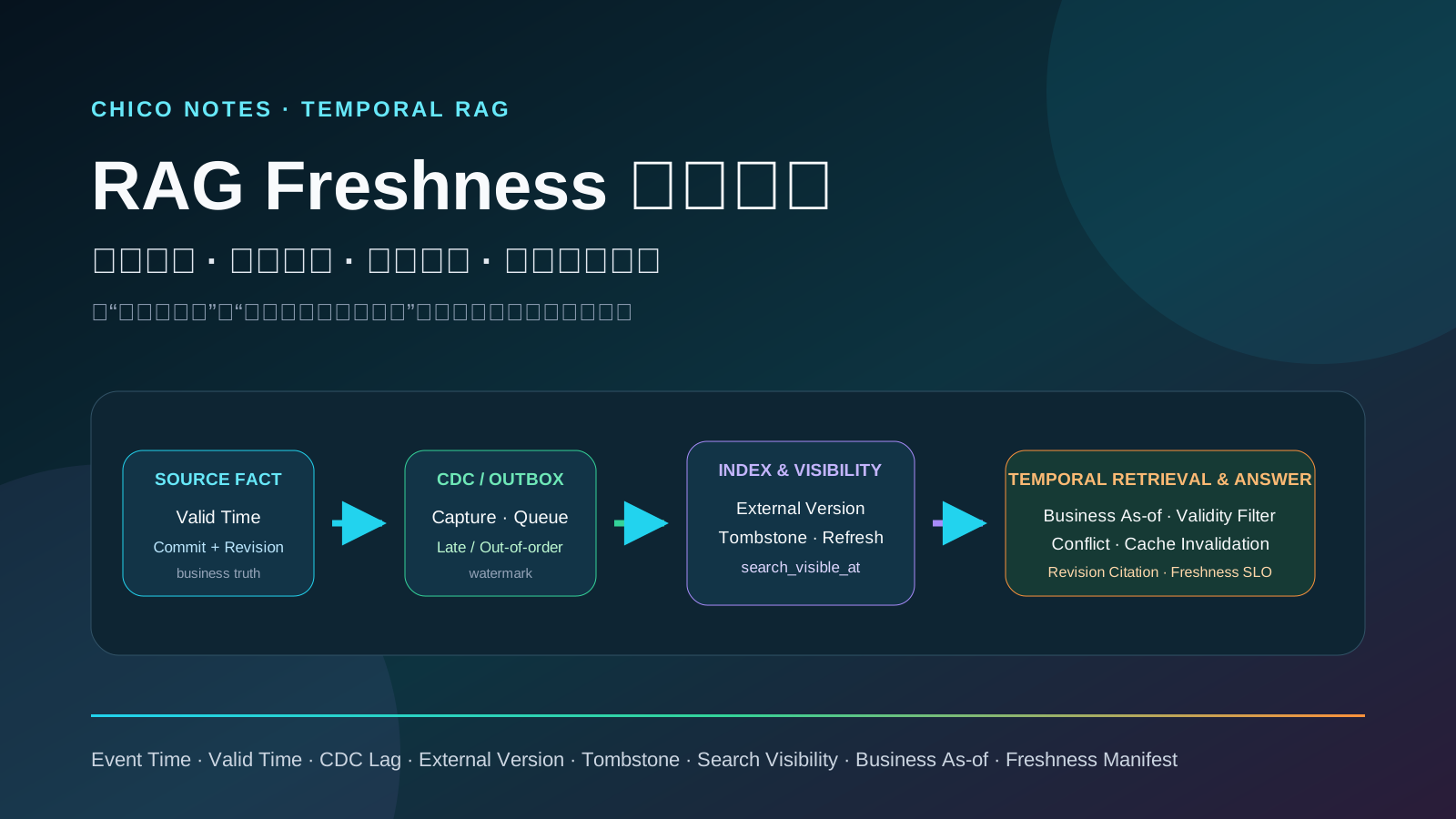
图 1:Freshness 是一条端到端时间链,不是单一 updated_at 字段。
一句话结论
一条 RAG 答案只有同时回答下面五个问题,才算“时间上可信”:
- 事实是什么时候发生或生效的?
- 系统是什么时候观察到并处理它的?
- 搜索索引是什么时候对查询可见的?
- 本次问题要求“当前”“历史”还是“截至某时”的答案?
- 答案引用的是哪个 Source Revision,数据截至什么时间?
推荐把 Freshness 建模为:
Source Valid Time
+ Source Commit Time
+ CDC Capture Time
+ Queue / Processing Time
+ Index Write Time
+ Search Visible Time
+ Cache Invalidation Time
+ Query Business As-of
+ Citation Revision
1. Freshness 不是一个时间戳,而是一组时间语义
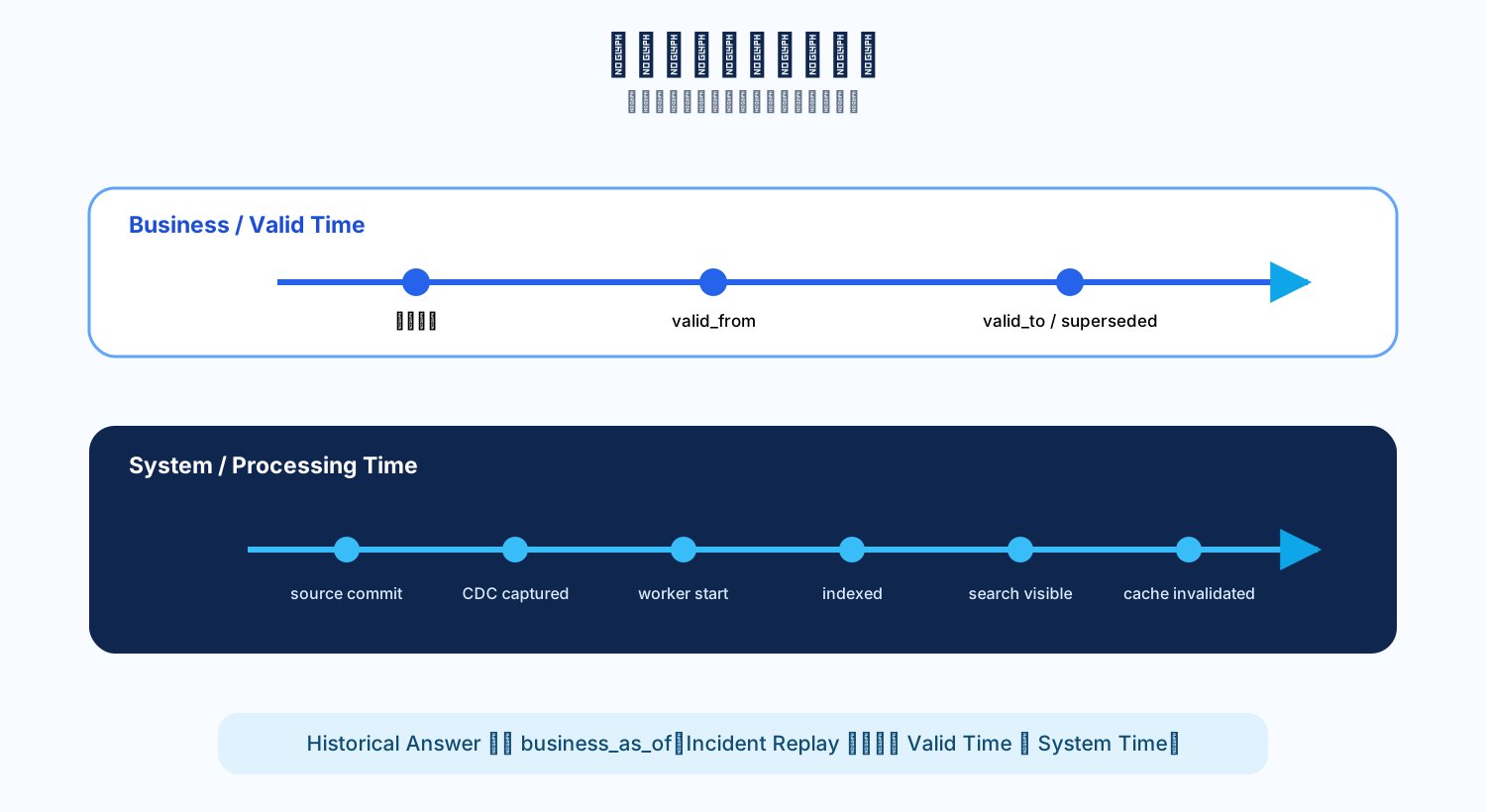
图 2:同一条事实至少需要区分业务有效时间和系统观察时间;否则历史问答、回放和延迟归因都会混在一起。
1.1 Event Time
事实在业务世界中发生的时间:
订单创建时间
政策生效时间
接口版本发布日期
会议发生时间
字幕对应的视频时间
1.2 Source Commit Time
变化在来源数据库或内容系统中正式提交的时间。
Debezium 事件中的 source.ts_ms 可用于表示来源数据库提交变化的时间;事件顶层的 ts_ms 则表示 Connector 处理该事件的时间。二者之差可以用于观察 CDC 处理延迟。
1.3 Processing Time
某个 Worker、Indexer 或 Enrichment Job 实际处理事件的本地时间。
它容易受队列、重试、机器负载和网络影响,不应该替代业务时间。
1.4 Ingest / Index / Visible Time
ingested_at
→ 进入知识摄取系统

indexed_at
→ 写入搜索后端

search_visible_at
→ 搜索请求能够稳定读到

cache_invalidated_at
→ 旧缓存已经失效
Elasticsearch 是 Near Real-Time 搜索系统。写入成功与搜索可见之间可能存在 Refresh 延迟,因此 indexed_at 不等于 search_visible_at。
1.5 Answer Time 与 Business As-of
asked_at
→ 用户发问时间

business_as_of
→ 用户真正要求的业务时间

answered_at
→ 系统完成回答时间
问题:
“现在报销标准是多少?”通常隐含:
business_as_of = current business time问题:
“2024 年 12 月报销标准是多少?”必须使用历史有效版本,而不是当前最新文档。
2. Valid Time 与 System Time:建议使用双时间模型
双时间模型把两个问题分开:
Valid Time
→ 事实在业务世界中何时有效

System Time
→ 系统从何时开始知道并保存这条事实
例如:
政策 6 月 1 日生效
但 6 月 3 日才上传到知识库
则:
valid_from = 2026-06-01
system_observed_at = 2026-06-03
历史回放时可以分别回答:
“6 月 2 日业务上有效的政策是什么?”
“系统在 6 月 2 日当时能够知道什么?”
2.1 推荐字段
{
  "source_id": "policy_remote_work",
  "source_revision": 12,
  "valid_from": "2026-06-01T00:00:00+08:00",
  "valid_to": null,
  "source_committed_at": "2026-06-03T09:14:20+08:00",
  "observed_at": "2026-06-03T09:14:23+08:00",
  "indexed_at": "2026-06-03T09:14:31+08:00",
  "search_visible_at": "2026-06-03T09:14:33+08:00",
  "status": "active"
}
2.2 不能只依赖 updated_at
updated_at 可能表示:
- 用户最后保存时间;
- 内容系统同步时间;
- 文件复制时间;
- 元数据更新;
- 业务生效时间;
- 重建索引时间。
一个字段承载多个含义,会让过滤、排序和审计失去确定性。
3. Freshness SLO:从来源变化到答案可见
不要只设:
文档每天同步一次而应定义端到端 SLO。
Source Change
→ Searchable
→ Answerable
→ Cache Correct
3.1 分阶段 SLO
| 阶段 | 指标 | 示例 SLO |
|---|---|---|
| Source Commit → CDC | CDC Capture Lag | P95 < 10s |
| CDC → Worker | Queue Lag | P95 < 20s |
| Worker → ES Write | Projection Lag | P95 < 30s |
| ES Write → Search Visible | Visibility Lag | P95 < 5s |
| Source Change → Cache Invalidated | Cache Invalidation Lag | P95 < 45s |
| Source Change → Correct Answer | End-to-End Freshness Lag | P95 < 60s |
3.2 分来源等级
freshness_tiers:
  critical_policy:
    e2e_p95: 60s
    stale_answer_tolerance: 0
  product_docs:
    e2e_p95: 10m
    stale_answer_tolerance: 0.001
  historical_archive:
    e2e_p95: 24h
    stale_answer_tolerance: 0.01
不是所有来源都需要同样低的延迟,但每个来源都应该有明确承诺。
4. 端到端传播链路
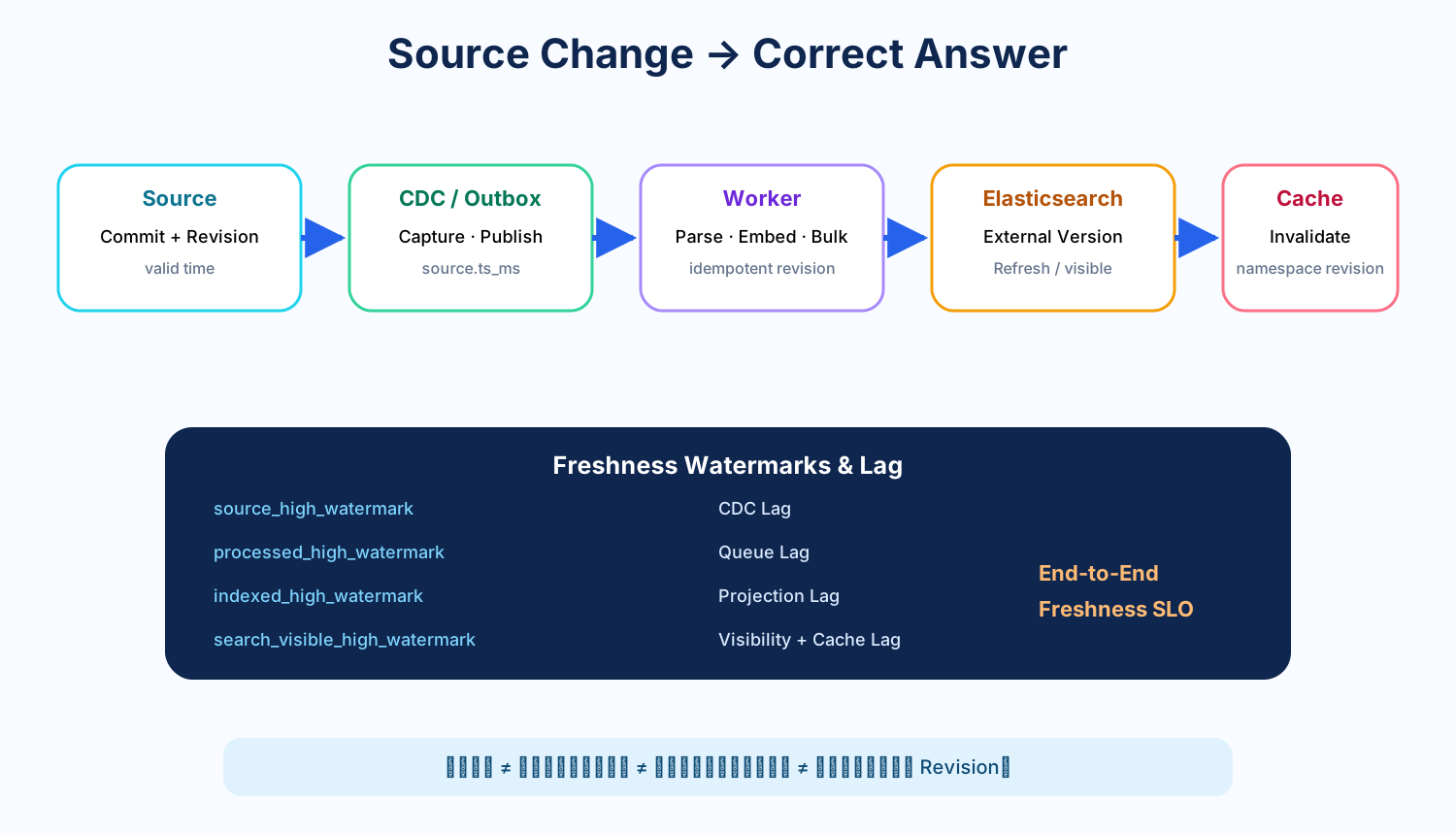
图 3:Freshness Lag 应被拆到每个阶段;“答案过期”不能只归因于搜索索引。
4.1 推荐保留的阶段时间
{
  "source_committed_at": "...",
  "cdc_captured_at": "...",
  "queue_published_at": "...",
  "worker_started_at": "...",
  "indexed_at": "...",
  "search_visible_at": "...",
  "cache_invalidated_at": "..."
}
这样才能定位:
来源没更新
CDC 没捕获
队列积压
Embedding 过慢
Bulk 部分失败
Refresh 延迟
缓存未失效
5. CDC、Outbox 与顺序保证
5.1 CDC 负责捕获变化,不负责定义业务语义
Debezium 可以输出:
c → create
u → update
d → delete
r → snapshot read
但业务系统仍需要决定:
- 哪些字段变化需要重建 Embedding;
- 哪些变化只更新 Metadata;
- 状态变化是否立即禁用检索;
- 主键变化如何清理旧文档;
- 删除是否写 Tombstone;
- 同一实体如何生成单调 Revision。
5.2 Outbox 用于绑定业务事务
CREATE TABLE knowledge_outbox (
  event_id VARCHAR(64) PRIMARY KEY,
  aggregate_id VARCHAR(64) NOT NULL,
  aggregate_type VARCHAR(64) NOT NULL,
  source_revision BIGINT NOT NULL,
  event_type VARCHAR(32) NOT NULL,
  source_committed_at DATETIME(6) NOT NULL,
  payload JSON NOT NULL,
  published_at DATETIME(6),
  created_at DATETIME(6) NOT NULL,
  UNIQUE KEY uk_aggregate_revision (
    aggregate_id,
    source_revision
  )
);
业务事实和 Outbox Event 在同一事务提交,可以避免“数据库已经更新,但同步消息丢失”。
5.3 Late 与 Out-of-order Event
流式系统中:
Revision 12
可能比 Revision 11 先到达 Indexer
不能按消息到达时间决定最终状态。
accept(event)
only if
event.source_revision > stored.source_revision
Elasticsearch 的 version_type=external 可以使用来源系统维护的单调版本,只接受比当前更高的版本。
5.4 Watermark 思维
Apache Flink 使用 Event Time 与 Watermark 处理乱序和迟到事件。RAG 索引系统不一定直接使用 Flink,但可以吸收其思想:
Watermark
→ 当前认为已经完整处理到哪个 Source Event Time / Revision
每个数据源或分区可以维护:
source_high_watermark
processed_high_watermark
indexed_high_watermark
search_visible_high_watermark
6. Revision、Tombstone 与删除传播
6.1 单调 Revision
source_revision
→ 业务实体内容状态版本

projection_schema_version
→ ES 投影结构版本

physical_index_generation
→ 物理索引代际
三者不能混成一个版本号。
6.2 Tombstone
删除不能只执行:
DELETE ES document因为旧 UPSERT 可能在稍后重放,使文档复活。
推荐保存:
{
  "entity_id": "doc_001",
  "source_revision": 19,
  "deleted": true,
  "deleted_at": "2026-08-06T10:03:00+08:00",
  "retain_until": "2026-09-06T10:03:00+08:00"
}
Tombstone 保留时间至少覆盖:
- 最大消息延迟;
- Worker 重试;
- DLQ 人工重放;
- 数据恢复;
- 跨区域同步。
6.3 主键变化
Debezium 对主键变化可能产生旧 Key 的 Delete / Tombstone 和新 Key 的 Create。Indexer 必须把它视为身份迁移,而不是普通 Update。
7. Elasticsearch 可见性与 Near Real-Time
写入成功不代表搜索立即可见。
7.1 Refresh 策略
refresh=false
→ 吞吐优先,等待自动 Refresh

refresh=wait_for
→ 等到本次写入可被搜索读取

refresh=true
→ 立即 Refresh,成本较高
生产建议:
- 批量索引默认依赖自动 Refresh;
- 高优先级更新使用
wait_for或专用索引策略; - 不要对每条普通更新都强制
refresh=true; - 单独测量
search_visible_at。
7.2 Search Visibility Probe
写入后可以通过轻量探测确认:
目标 Document ID
+ expected source_revision
是否已经被 Search API 返回。
7.3 Point-in-Time
Elasticsearch Point-in-Time 可以为分页或评测提供稳定的搜索视图。它解决的是“多次搜索看到同一快照”,不是自动解决业务有效时间;业务 as_of 仍需要显式字段和过滤。
8. 文档与 Chunk 的时间 Schema
{
  "knowledge_id": "policy_remote_work",
  "chunk_id": "policy_remote_work:sec_4",
  "source_revision": 12,
  "projection_schema_version": 4,
  "doc_status": "active",
  "valid_from": "2026-06-01T00:00:00+08:00",
  "valid_to": null,
  "source_committed_at": "2026-06-03T09:14:20+08:00",
  "indexed_at": "2026-06-03T09:14:31+08:00",
  "search_visible_at": "2026-06-03T09:14:33+08:00",
  "supersedes_revision": 11,
  "authority_level": 90,
  "freshness_tier": "critical_policy",
  "content_hash": "sha256:..."
}
8.1 Status
建议至少区分:
draft
active
deprecated
superseded
archived
deleted
deprecated 与 superseded 不一定应该从所有历史问题中排除。
8.2 Open-ended Validity
valid_to = null表示当前没有已知结束时间,不表示“永久有效”。
9. Query Time:用户问的是“现在”还是“当时”
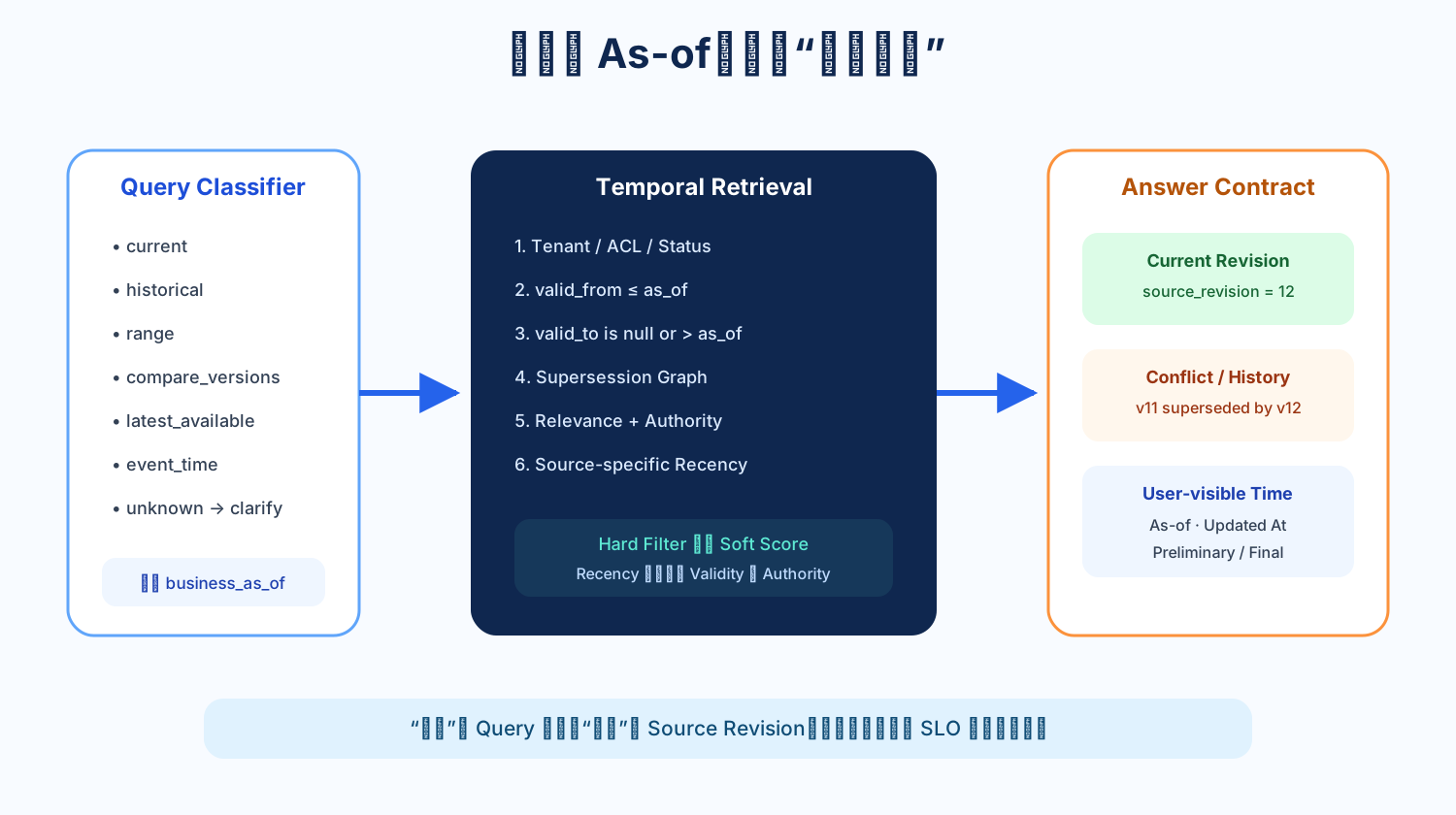
图 4:先判断时间意图,再决定过滤、排序和冲突策略。不能对所有 Query 统一使用“最新优先”。
9.1 Query 类型
current
→ 当前有效事实

historical
→ 某个过去时间点

range
→ 一段时间内的变化

compare_versions
→ 比较新旧版本

latest_available
→ 系统当前能看到的最新数据

event_time
→ 某个业务事件发生时的状态

unknown
→ 时间意图不明确,需要追问
9.2 Query Plan
{
  "temporal_intent": "historical",
  "business_as_of": "2024-12-31T23:59:59+08:00",
  "require_complete_period": true,
  "prefer_current": false,
  "allow_superseded": true,
  "must_explain_revision": true
}
9.3 Current Query Filter
{
  "bool": {
    "filter": [
      {
        "term": {
          "doc_status": "active"
        }
      },
      {
        "range": {
          "valid_from": {
            "lte": "now"
          }
        }
      }
    ],
    "must_not": [
      {
        "range": {
          "valid_to": {
            "lt": "now"
          }
        }
      }
    ]
  }
}
9.4 Historical Query Filter
valid_from <= business_as_of
AND
(valid_to IS NULL OR valid_to > business_as_of)
9.5 不要把 Recency Boost 当作时间正确性
Recency Score 只能在已满足有效期、状态和权限约束的候选之间排序。
Hard Filter
→ Validity / ACL / Status

Soft Score
→ Relevance / Authority / Recency
10. Freshness Ranking:相关性、权威和时间衰减
可以构造:
final_score =
  relevance_score
  × authority_factor
  × validity_factor
  × freshness_decay
10.1 时间衰减不适合所有来源
新闻
→ 强时间衰减

产品 Release Note
→ 中等时间衰减

正式政策
→ 以有效期和 Supersession 为主

历史档案
→ 不应因为旧而降权
10.2 Source-specific Policy
freshness_ranking:
  news:
    strategy: exponential_decay
    half_life: 7d
  product_docs:
    strategy: supersession_then_recency
    half_life: 90d
  policy:
    strategy: valid_time_then_authority
  archive:
    strategy: no_decay
10.3 Authority 优先级
最新内容不一定更权威:
个人笔记:今天更新
正式制度:上周发布
对于政策问题,正式制度仍应优先。
11. 新旧冲突与 Supersession Graph
11.1 Supersession 关系
revision 12
supersedes
revision 11
可以保存:
{
  "source_id": "policy_remote_work",
  "revision": 12,
  "supersedes": [11],
  "supersession_reason": "annual_policy_update"
}
11.2 冲突类型
Temporal Conflict
Definition Conflict
Numeric Conflict
Authority Conflict
Locale Conflict
Draft vs Active Conflict
11.3 Context 处理
Current Query
→ 正文使用当前有效版本
→ 旧版本作为 Historical / Contradicting Evidence
→ 必要时解释变更

Historical Query
→ 使用对应 As-of 版本
→ 不把当前版本替换进去

Compare Query
→ 两个版本并列
→ 显示 Diff 与有效期
12. Cache Freshness:TTL 不是正确性保证
12.1 Versioned Key
answer_cache_key =
  tenant
  + permission_scope_hash
  + normalized_query
  + business_as_of
  + corpus_revision
  + context_pack_hash
  + answer_prompt_version
  + model_key
12.2 主动失效
Source Update Event 应触发:
Retrieval Cache
Context Cache
Answer Cache
Citation Preview Cache
失效事件也需要版本:
{
  "event_type": "knowledge_revision_changed",
  "knowledge_id": "policy_remote_work",
  "new_revision": 12,
  "affected_cache_namespaces": [
    "retrieval",
    "context",
    "answer"
  ]
}
12.3 Stale-while-revalidate
适合低风险内容:
先返回短期 Stale
→ 后台刷新
不适合:
- 权限撤销;
- 紧急政策;
- 价格;
- 法律、医疗与安全;
- 用户明确要求“最新”。
12.4 Negative Cache
“没有结果”也可能过期。
昨天没有文档
今天刚上传
Negative Cache TTL 应比普通成功缓存更短,并绑定 Corpus Revision。
13. 答案必须声明 As-of 与 Evidence Revision
{
  "answer": "当前远程办公补贴上限为每年 5,000 元。",
  "as_of": "2026-08-06T10:20:00+08:00",
  "data_freshness": {
    "source_committed_at": "2026-08-06T10:18:30+08:00",
    "search_visible_at": "2026-08-06T10:18:43+08:00",
    "freshness_lag_seconds": 13
  },
  "citations": [
    {
      "source_id": "policy_remote_work",
      "source_revision": 12,
      "valid_from": "2026-06-01",
      "source_span_id": "page12_p3"
    }
  ]
}
13.1 用户可读声明
依据:远程办公政策 v12
生效时间:2026-06-01
数据同步截至:2026-08-06 10:18
13.2 Preliminary 与 Final
统计数据可能存在:
preliminary
final
revised
答案应明确:
当前为初步数据,可能因迟到事件修订。14. Freshness Manifest
{
  "freshness_manifest_id": "fm_20260806_001",
  "query_id": "q_001",
  "business_as_of": "2026-08-06T10:20:00+08:00",
  "source_watermarks": [
    {
      "source_id": "cms_policy",
      "source_high_watermark": 128812,
      "indexed_high_watermark": 128812,
      "search_visible_high_watermark": 128812,
      "lag_seconds": 13
    }
  ],
  "selected_revisions": [
    {
      "knowledge_id": "policy_remote_work",
      "source_revision": 12,
      "valid_from": "2026-06-01",
      "status": "active"
    }
  ],
  "stale_candidates_removed": 3,
  "conflict_ids": [
    "conf_policy_v11_v12"
  ],
  "cache": {
    "answer_cache_hit": false,
    "cache_namespace_revision": 128812
  },
  "freshness_status": "within_slo"
}
它用于:
- Answer Trace;
- Freshness Evaluation;
- Bad Case Replay;
- Cache Debug;
- 发布门禁;
- 审计。
15. Observability:Freshness Lag 必须可分解
rag.freshness
├── source.observe
├── cdc.capture
├── queue.consume
├── projection.write
├── search.visibility
├── cache.invalidate
├── temporal.retrieve
└── answer.freshness
15.1 核心指标
| 指标 | 含义 |
|---|---|
| Source-to-CDC Lag | 来源提交到捕获 |
| CDC-to-Queue Lag | 捕获到发布 |
| Queue Lag | 队列等待 |
| Projection Lag | Worker 处理和写入 |
| Search Visibility Lag | 写入到可搜索 |
| Cache Invalidation Lag | 变化到旧缓存清除 |
| End-to-End Freshness Lag | 来源变化到正确回答 |
| Stale Retrieval Rate | 检索命中过期版本 |
| Stale Context Rate | 过期证据进入 Context |
| Stale Answer Rate | 最终答案依赖过期事实 |
| Watermark Gap | Source 与 Search Watermark 差 |
| Supersession Miss Rate | 旧版本未被识别 |
15.2 Debezium Lag
connector_processing_lag =
payload.ts_ms - payload.source.ts_ms
注意还需要单独测量:
source commit
→ connector event
→ queue
→ index
→ search visible
16. 评测:动态事实、历史事实和错误前提
FreshQA 包含需要快速变化知识的问题,也包含错误前提问题。它提醒我们:
“最近”“当前”“谁是现任”与静态知识问题必须分开评测。
16.1 Dataset Cohort
Fast-changing
Slow-changing
Historical As-of
Future-effective
Superseded
False Premise
Late-arriving
Deletion
Primary-key Change
Timezone Boundary
Preliminary vs Final
Permission Revocation
16.2 样本
{
  "case_id": "fresh_001",
  "question": "当前远程办公补贴上限是多少?",
  "asked_at": "2026-08-06T10:20:00+08:00",
  "business_as_of": "2026-08-06T10:20:00+08:00",
  "expected_revision": 12,
  "forbidden_revisions": [11],
  "expected_status": "active",
  "freshness_slo_seconds": 60,
  "expected_behavior": "answer_with_as_of_and_citation"
}
16.3 指标
Revision Accuracy
Valid-time Accuracy
As-of Interpretation Accuracy
Stale Retrieval Rate
Stale Context Rate
Stale Answer Rate
False Premise Rejection
Deletion Propagation Accuracy
Supersession Accuracy
Freshness SLO Pass Rate
17. Release Gate
Hard Gate
hard_gates:
  unauthorized_revision_rate:
    max: 0
  deleted_document_resurrection_rate:
    max: 0
  stale_answer_rate_critical:
    max: 0
  invalid_valid_time_rate:
    max: 0
  false_premise_answer_rate:
    max: 0
  missing_as_of_for_time_sensitive_answers:
    max: 0
Soft Gate
soft_gates:
  e2e_freshness_lag_p95_seconds:
    max_increase_ratio: 0.10
  search_visibility_lag_p95_seconds:
    max_increase_ratio: 0.20
  cache_invalidation_lag_p95_seconds:
    max_increase_ratio: 0.15
  revision_accuracy:
    max_drop: 0.005
  supersession_accuracy:
    max_drop: 0.005
Canary
观察:
- 新旧 Revision 命中分布;
- Watermark Gap;
- Queue Lag;
- Cache Stale Hit;
- Critical Source Freshness SLO;
- Temporal Query 错误;
- Delete Resurrection;
- 用户纠错和追问。
18. Freshness Incident 与 Runbook
18.1 常见事故
CDC 停止
队列积压
Embedding Provider 限流
Bulk 部分失败
Refresh 异常
Tombstone 丢失
Cache Invalidation 失败
Timezone 配置错误
Supersession Link 缺失
18.2 止损
critical source stale
→ 禁止确定性回答
→ 展示数据截至时间
→ 返回原始材料
→ 降级到实时 Source API
→ 人工升级
18.3 Repair
MySQL Source of Truth
→ 扫描当前 Revision
→ 对比 ES Revision
→ 对比 Cache Namespace
→ 补写 Missing / Stale
→ 删除 Orphan
→ 重建 Watermark
18.4 Evidence Freeze
事故时保存:
- Source Revision;
- CDC Offset;
- Queue Offset;
- Worker Attempt;
- ES Physical Index;
- Search Visible Result;
- Cache Key;
- Context Pack;
- Answer;
- Citation;
- Timestamp / Timezone。
19. 分阶段落地路线
P0:先避免明显过期答案
valid_from / valid_to / status / revision;- Source of Truth;
- CDC 或 Transactional Outbox;
- External Version;
- Tombstone;
- Current / Historical Query 分类;
- Cache Key 绑定 Corpus Revision;
- Answer As-of;
- Freshness Trace;
- Critical Hard Gate。
P1:端到端 Freshness SLO
- Source / CDC / Queue / Index / Visible Watermark;
- Search Visibility Probe;
- Source-specific Freshness Tier;
- Supersession Graph;
- Temporal Conflict;
- Freshness Manifest;
- Cohort Evaluation;
- Canary Dashboard;
- Repair Job。
P2:自适应与预测式 Freshness
- 变化频率预测;
- Source Priority Scheduling;
- Proactive Refresh;
- Learned Freshness Ranking;
- Streaming Embedding;
- Live Source API + Indexed RAG Fusion;
- Preliminary / Final Revision Forecast;
- Agentic Freshness Verification;
- 自动根因归类。
20. 上线检查清单
- 是否区分 Event Time、Commit Time、Processing Time 和 Visible Time?
- 是否有
valid_from / valid_to? - 是否有单调
source_revision? -
updated_at是否没有被滥用于多个语义? - Source Fact 与 Outbox 是否同事务?
- CDC Event 是否记录
source.ts_ms与处理时间? - 是否测量 Source-to-CDC Lag?
- 是否测量 Queue Lag?
- 是否使用 External Version 阻止旧事件覆盖?
- 是否处理主键变化?
- 删除是否写 Tombstone?
- Tombstone 保留窗口是否覆盖重试和 DLQ?
- 是否区分写入成功与搜索可见?
- 是否测量 Search Visibility Lag?
- 是否为 Critical Source 定义 Freshness Tier?
- 是否维护 Source / Indexed / Visible Watermark?
- Query 是否分类为 Current、Historical、Range 或 Compare?
- 是否显式生成
business_as_of? - Valid Time Filter 是否先于 Recency Boost?
- 最新来源是否同时满足 Authority 规则?
- 是否识别 Superseded Revision?
- Context 是否保存 Temporal Conflict?
- Answer Cache 是否绑定 Corpus Revision 与 Business As-of?
- Source Update 是否主动失效缓存?
- Negative Cache TTL 是否更短?
- 高风险来源是否禁止 Stale-while-revalidate?
- 答案是否声明 As-of 和 Data Updated At?
- Citation 是否绑定 Source Revision?
- 是否区分 Preliminary、Final 和 Revised?
- 是否保存 Freshness Manifest?
- 是否计算 Stale Retrieval / Context / Answer Rate?
- 是否评测 False Premise?
- 是否有 Delete Resurrection Hard Gate?
- 是否有 Freshness Incident Runbook?
- Repair Job 是否能从 Source of Truth 重建索引和 Watermark?
总结
RAG Freshness 的目标不是让所有文档都“越新越好”,而是让系统知道:
什么时间发生
什么时间生效
什么时间被系统观察
什么时间进入索引
什么时间对搜索可见
用户问的是哪个时间点
答案引用的是哪个 Revision
当前数据是否满足 Freshness SLO
最重要的工程原则是:
时间正确性必须先由 Valid Time、Revision、Status 和 Scope 决定,再由 Recency 参与排序。没有端到端 Watermark、Source Revision、Cache Invalidation 和 Answer As-of,就无法证明“最新答案”真的使用了最新事实。
参考资料
- FreshLLMs: Refreshing Large Language Models with Search Engine Augmentation
- Apache Flink: Time Attributes and Event Time
- Apache Flink: Debugging Windows & Event Time
- Debezium MySQL Connector
- Elasticsearch Index API and External Versioning
- Elasticsearch Point in Time
- MySQL 到 Elasticsearch 一致性
- RAG 缓存策略生产实战
- RAG Context Engineering 生产实战
- Citation Engineering 生产实战
- RAG 可观测性生产实战
- RAG 评测生产实战
讨论
继续讨论这篇笔记
有问题、补充案例或不同观点,可以通过 GitHub Discussions 继续交流。